Home-cooked food is often the star of a family celebration — jollof rice, curries, stews, roasts and trays of vegetables made with love. The hard part is not the cooking. It is keeping everything hot and safe from the moment it leaves your kitchen until the last guest fills their plate. Here is how to do it without spending the whole party in the kitchen.
Know the two food safety rules that matter
Australian food safety guidance gives hosts two simple rules to work with:
- Keep hot food at 60°C or hotter. Bacteria grow fastest between 5°C and 60°C, often called the temperature danger zone.
- Use the 2-hour/4-hour rule. Cooked food that has been in the danger zone for less than 2 hours can be used or refrigerated. Between 2 and 4 hours, it should be used straight away. After 4 hours, it should be thrown out.
For a party, that means keeping hot food properly hot the whole time, rather than letting it sit out and slowly cool.
Step 1: Transport food hot
If you are cooking at home and serving at a hall, church or park, the drive is where food starts to cool. Insulated food warmers solve this. Fill them with food that is already piping hot, close the lids and keep them closed until you are ready to serve. A full warmer holds heat better than a half-empty one, so group smaller dishes together.
Step 2: Serve from chafing dishes
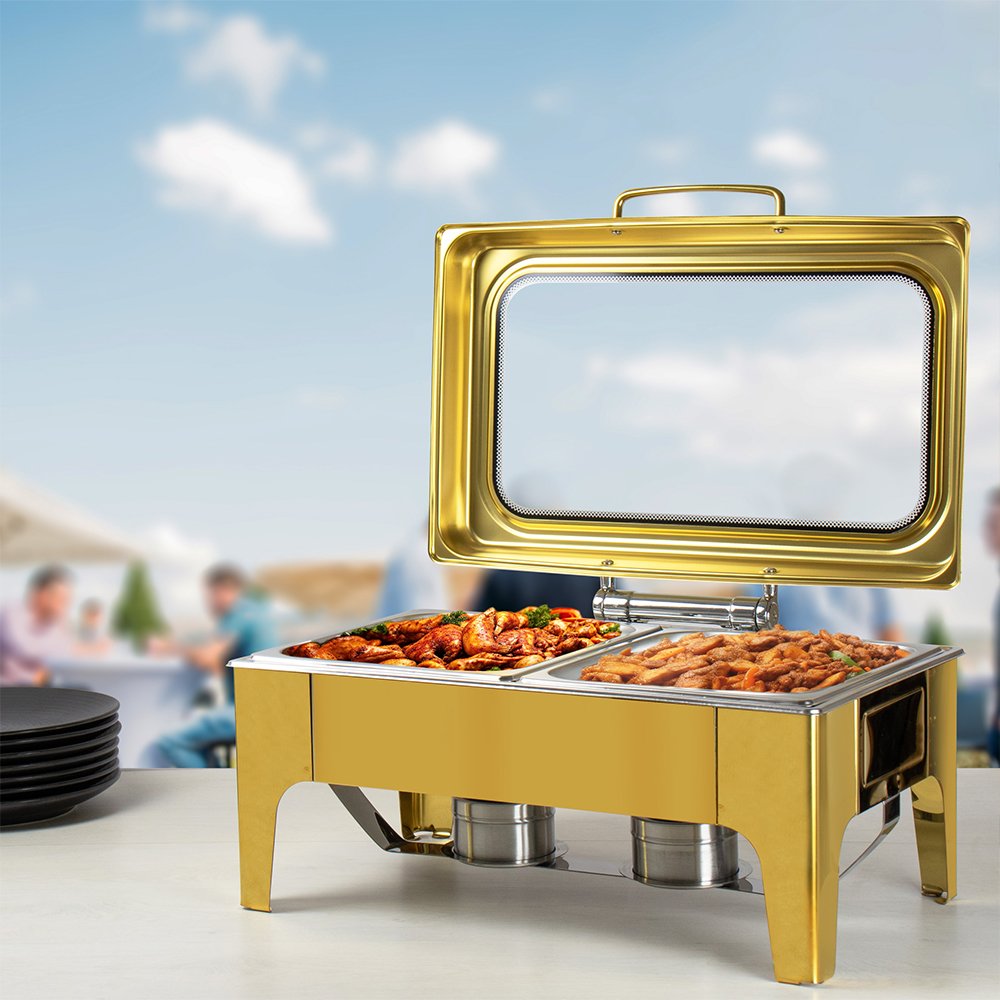
Once you arrive, move hot dishes into chafing dishes on the buffet table. They hold food at serving temperature for hours and make a home-cooked spread look professionally catered. Remember that chafing dishes are for keeping food hot, not reheating it, so put food in hot.
How many chafing dishes do you need?
A simple rule of thumb is one chafing dish for each hot dish on the menu. For larger guest lists, double up on the most popular dishes, such as rice or the main meat dish, so the queue keeps moving. One set of six suits most family parties; bigger celebrations often book two.
Step 3: Cook big batches on site
For very large events, some dishes are best cooked on site. A heavy-duty outdoor gas burner brings large pots to the boil quickly, which is ideal for rice, soups and stews for a crowd. Always use it outdoors, on firm, level ground, away from anything flammable. During the fire danger season, check the Country Fire Service (CFS) rules for Total Fire Ban days before cooking outdoors.
Step 4: Set up the buffet for flow
- Put plates at the start of the table and cutlery and serviettes at the end, so guests are not juggling everything while they serve.
- If you have more than 80 guests, consider setting the buffet up so guests can serve from both sides.
- Place serving spoons on a small plate beside each dish to keep the table clean.
- Label dishes, especially anything spicy or containing common allergens like nuts, dairy or seafood.
Step 5: Refresh rather than refill
Instead of topping up a half-empty tray, swap in a fresh hot tray from the food warmers. It keeps the buffet looking generous and avoids mixing fresh food with food that has been sitting out.
A simple hot-buffet checklist
- Food warmers for transport
- Chafing dishes for serving
- A heavy-duty gas burner if you are cooking on site
- Serving spoons and tongs for every dish
- Labels for dishes and allergens
- Containers and an esky with ice for leftovers
The Events 360 delivers food warmers, chafing dishes and gas burners across Adelaide in one booking. See our prices or check your date.